Thursday, 30 October 2014

Irish watchdog likely to recommend that energy drinks are not consumed by children


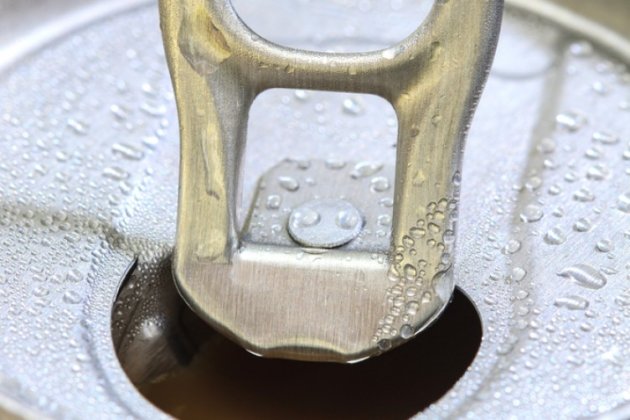
Food safety watchdog Safefood has been asked by the Department of Health of review research on the negative health effects of energy drinks.
Research by the World Health Organisation (WHO) this month found that energy drinks will become a significant public health problem if their use among young people is not addressed through a cap on caffeine levels and restrictions on their sale and marketing.
In response to a parliamentary question from TD Billy Kelleher, Minister for Health Leo Varadkar said his department had asked Safefood to consider the current evidence and advise his department.
Dr Cliodhna Foley-Nolan, who is Safefood’s Director of Human Health & Nutrition, told TheJournal.ie that two main health effects of these drinks have been recorded in research so far:
    A marked increase in blood pressure
  • Excessive calorie intake.
“Obviously there are other issues as these products are taken with other substances – specifically alcohol or drugs – and that has been implicated in some serious incidents including suicides,” she explained.
She said an option to request that these drinks are not served in bars and clubs alongside alcohol is “in the mix for consideration” but stressed that it is too early to say what the watchdog will be recommending.
Consumption
Research has shown that levels of consumption of these products are high and are on the rise. A European food safety report in 2013 found that 30% of adults consumed these products, with 16-20% of people drinking them four to five times a week.
Previous recommendations by Safefood in 2002 regarding these drinks included a warning to the public that caution should be exercised when consuming them with alcohol. They also recommended that marketing should be “without ambiguity or association with sport,” Foley-Nolan noted.
“I don’t anticipate that they will change,” she said. It is also expected that the watchdog will recommend that these drinks are not consumed by children. Lithuania banned the sale of energy drinks to anyone under 18 earlier this year and has been encouraging other European countries to follow suit.
“Guidelines are different from policy obviously,” Foley-Nolan added. “We will do what we can to clarify matters and I think fair dues as it’s an important issue”.
It is expected that Safefood will pass its recommendations to the department before the end of the year.

Wednesday, 29 October 2014

Nigerian dad sues US school after daughter is banned over Ebola fears

A Nigerian father (pictured above) has sued a school in the US, Connecticut elementary school, saying his 7-year-old daughter was discriminated against and banned from school for 21 days based on irrational fears of Ebola because she attended a wedding in Nigeria.

From Reuters
Stephen Opayemi filed the lawsuit in federal court in New Haven, Connecticut. He asked a judge to order the schools in Milford, Connecticut, to immediately permit his daughter to return to her third-grade class.
Opayemi's daughter has not experienced any symptoms associated with Ebola and her health is fine, but parents and teachers were concerned she could transmit Ebola to other children, the lawsuit says.
The school
"We're hoping this will get her back into school as soon as possible," the girl's mother, Ikeolapo Opayemi, said in a brief interview at their home.
Although the mother declined to discuss details of the lawsuit, citing the advice of the family's attorney, she said they had lived in Milford for more than six years. Asked if she was surprised by the school system's actions, she nodded in agreement.
Nigeria had 20 Ebola cases and eight deaths this year before the World Health Organization declared the country Ebola-free on Oct. 19. The epidemic is centered in three other West African countries, where about 5,000 people have died: Guinea, Liberia and Sierra Leone.
The Connecticut third-grader, Ikeoluwa Opayemi, traveled to and from Lagos, Nigeria, between Oct. 2 and Oct. 13, according to the lawsuit. Her father, a native of Nigeria, also went.
Jonathan Berchem, the Milford city attorney, said he had not seen the suit and could not comment on it. Elizabeth Feser, the school superintendent, did not return a call requesting comment but said in an email she had not been served with the suit.
African communities in the United States have reported an increasing amount of ostracism since the Ebola epidemic began. At least two speeches by Liberians have been canceled by U.S. universities, and a college in Texas refused admission to Nigerian students over worries about the virus.
A neighbor of the Opayemi family, Prashant Batil, said his 6-year-old plays often with Ikeoluwa and that he believed the school system was overreacting.
"The parents are extremely responsible people, and if they say she does not have Ebola, I would have no reluctance for my daughter to play with her," Batil said in an interview.
Opayemi's suit was filed under the Americans with Disabilities Act. The law prohibits discrimination based on someone having a physical or mental impairment, or on the belief that someone has such an impairment.
Milford officials refused the father's offer to have both himself and his daughter screened for Ebola, the suit says.
According to the suit, a city health official said in an Oct. 15 meeting that the risk of the girl infecting anyone was minor but that she ought to be quarantined because of rumors, panic and the climate of the school.
City and school officials told Ikeoluwa not to return to school until Nov. 3, the suit says.
The case is Ikeoluwa Opayemi v. Milford Public Schools and City of Milford, U.S. District Court for the District of Connecticut, No. 3:14-cv-01597.

Tuesday, 28 October 2014

Family fights for life after puffer fish dinner

A Brazilian family is in a critical condition after eating one of the world's deadliest fish for dinner.
The Souza family cooked and served up the puffer fish, which a friend had caught during a day's fishing.
 
Family fights for life after puffer fish dinner
However, they were all unaware that the fish contains a toxin 1200 times more lethal than cyanide, a drop of which can kill within 24 hours.
The 11 members of the family became violently ill just seconds after they took their first bite of the meal.
Everyone in the family, including four children under the age of six, started to vomit and lost the feeling in their faces, legs, and arms and then became totally paralysed.
Christiane Souza, whose husband Jose Augusto ate the fish, said she invited the whole family to what she thought was going to be a delicious fish feast.
"The fish looked so tasty so we invited the whole family. We fried it and everyone tucked in," she told Brazil's RJ TV.
"They were all saying how delicious it was. I didn't eat it because I was waiting until everyone had tried it.
"My husband was the first to say he couldn't feel his tongue, then his face, and then his arms. Then his legs went dead and he couldn't stand up anymore. It was terrifying."
Grandmother Maria Do Carmo didn't eat the fish either, and said her grandson, daughter and son-in-law were all fighting for their lives.
"We're praying for a miracle," she said.
Puffer fish is considered a delicacy in Japan, but chefs have to undergo two years of training before they are permitted to cook the fish to customers.
There is no known cure for the poison, which paralyses and suffocates the victims while they are still awake, The Metro reports.

Tuesday, 10 September 2013

Police say iPad may prove key in Zimmerman marital altercation case

Police say iPad may prove key in Zimmerman marital altercation case


Watch this video

Zimmerman's wife calls 911 on him

STORY HIGHLIGHTS
  • "Unfortunately, the iPad is in several pieces," police spokesman says
  • Shellie Zimmerman placed 911 call and said she and her father were threatened
  • No gun was found in Monday's alleged incident
(CNN) -- An iPad used to shoot video of a confrontation that allegedly erupted Monday between George Zimmerman and his estranged wife, Shellie, and her father might prove key in determining whether charges will be filed, police said Tuesday in Lake Mary, Florida.
"Unfortunately, the iPad is in several pieces," police spokesman Zach Hudson told reporters about the device, which he said George Zimmerman had damaged.
The incident comes two months after Zimmerman, a neighborhood watch volunteer, was acquitted of second-degree murder in the shooting death in nearby Sanford of Trayvon Martin, a 17-year-old unarmed youth.
Police have sent the pieces of the iPad for analysis, Hudson said. "We want to get all the information, the footage, off it."
Zimmerman's wife not pressing charges
What's next for George Zimmerman?
Zimmerman's wife files for divorce
Photos: Zimmerman trial Photos: Zimmerman trial
It was not clear who, if anyone, would be charged in the case, he said. "It depends on what the iPad has on it," he said. "What that footage looks like."
No charges were filed after the incident on Monday afternoon, when police answered a 911 call from Shellie Zimmerman during which she said her husband had threatened her and her father with a gun.
"There was no gun found," Hudson said. "There was no weapon, nor was there any weapon involved. Nobody ever saw a gun. A gun is definitely not part of any evidence in this particular case."
Shellie Zimmerman's reference to a gun during her call to 911 is not likely to result in any charges, he said.
"Any time you have a divorce, emotions are going to run high," Hudson added. "In this case, obviously, that was happening and, unfortunately, you had an incident. We need to find out and determine if a crime was committed during that incident."
No one was injured at the house, he said. "They put hands on each other. I don't know if that was fists or pushing."
Shellie Zimmerman and her father, David Bryant Dean, had gone to the house she had shared with George Zimmerman to pick up some of her belongings.
The Zimmermans had texted Monday morning, and she told him she was going go the house, according to a person with whom the family shared the texts.
George Zimmerman and a friend also went to the house, where he got into a heated discussion with Dean, Zimmerman's attorney, Mark O'Mara, told CNN on Monday. Police said it was then that Zimmerman broke the iPad.
"There was heightened emotion, and a disagreement took place," O'Mara said Monday. He added that Shellie Zimmerman no longer lives at the house, which is owned by her father.
O'Mara has since announced that he will no longer represent Zimmerman.
Shellie Zimmerman's divorce filing last week in Seminole County came after she pleaded guilty to perjury on August 28 for lying about the couple's finances during a bond hearing in April 2012. She had said she and her husband were broke, when they had collected about $135,000 in donations from supporters.
Since his acquittal on July 13, George Zimmerman has returned several times to the headlines. In late July, he helped a family escape from an overturned SUV. And he has been pulled over in traffic twice. The first time, he was given a verbal warning for a traffic violation in Texas and reportedly told officers he had a firearm in his glove compartment. The second time was in Florida last week, when he was issued a $256 ticket for speeding.
Under Florida law, it is up to police to decide whether to press charges for domestic battery.

CNN exclusive: George W. Bush on AIDS, Mandela, Snowden and his legacy

CNN exclusive: George W. Bush on AIDS, Mandela, Snowden and his legacy


Watch this video

George W. Bush builds on legacy in Africa

STORY HIGHLIGHTS
  • The former president tells CNN that Snowden has hurt U.S. security
  • He refrains from criticizing Obama, who he says has a "hard job"
  • Nelson Mandela's legacy "will last for a long time," Bush says
  • He says he bears no grudge against Mandela for Iraq criticism
(CNN) -- Former President George W. Bush and his wife, Laura, are in Africa this week, where they renovated a cancer screening clinic in Zambia and commemorated the victims of the 1998 U.S. Embassy bombing in Tanzania.
The clinic, which is designed help women fight cervical cancer, builds on the former president's work fighting AIDS on the continent. While he was in office, Bush set up a plan that dramatically reduced the number of AIDS deaths in Africa.
"I'm really proud of the American people for their generosity," he told CNN in an exclusive interview. "I wish Americans knew how many lives were saved. Someday, they will."
Bush also told CNN why he respects Nelson Mandela, what he thinks about Edward Snowden and President Barack Obama, and how he's not going to be around when his legacy is finally decided.
Photos: Bushes renovate Zambian clinic Photos: Bushes renovate Zambian clinic


• On Snowden: "I think he damaged the security of the country."
• On Mandela: "His legacy will last for a long time."
• On Obama: "It's a hard job. He's got plenty on his agenda."
Bush talked about Snowden, the computer contractor who leaked details about secret U.S. surveillance programs, to CNN's Robyn Curnow in Zambia on Sunday.
He said he believes the Obama administration "will deal" with the fallout from the controversy unleashed by Snowden, who is now thought to be holed up in the transit area of a Moscow airport after fleeing there from Hong Kong.
Snowden's disclosures about the programs carried out by the National Security Agency have shaken the U.S. intelligence community and put the Obama administration on the defensive over accusations of government overreach into citizens' privacy.
But Bush refrained from criticizing the current president.
"I don't think it does any good," he said. "It's a hard job. He's got plenty on his agenda. It's difficult. A former president doesn't need to make it any harder. Other presidents have taken different decisions; that's mine."
The White House has defended the surveillance programs as necessary tools to defuse terrorist threats. Obama has said he welcomes a debate over how to strike a balance between security and privacy.
"I think there needs to be a balance, and as the president explained, there is a proper balance," Bush said.
I made decisions that were the right decisions. History will ultimately judge.
George W. Bush
Asked about an NSA program that tracks people's Internet activity, Bush said, "I put that program in place to protect the country. One of the certainties was that civil liberties were guaranteed."
Snowden has said he leaked information to journalists about the surveillance programs in the hope of ending what he called an excessively intrusive system.
The Bushes were at a renovated health clinic in Livingstone, Zambia, scheduled to open Monday as a cervical cancer screening and treatment center. They hope this will save the lives of thousands of women.
In his comments, George Bush touched on the subject of Mandela, who is on life support in a South African hospital.
 
"Sometimes, there are leaders who come and go. His legacy will last for a long time," he said of the ailing anti-apartheid icon.
Reminded by Curnow that Mandela had criticized him publicly about the war in Iraq, Bush said he didn't bear a grudge.
"He wasn't the only guy," he said. "It's OK. I made decisions that were the right decisions. History will ultimately judge. I never held someone's opinion against him; I didn't look at him differently because he didn't agree with me on an issue."
Bush also initially said he wasn't bothered about his ratings in opinion polls, even if some of them now put him at a similar level to Obama.
"The only time I really cared was on Election Day," he said.
Then, drawing laughter from his wife, he checked himself and said, "You know, I guess it's nice. I mean, let me rephrase that: Thank you for bringing it up."
In any case, the former president said he doesn't expect a fair assessment of his legacy in his lifetime.
"I won't be around, because it will take a while for the objective historians to show up," he said. "So I'm pretty comfortable with it, I did what I did; I know the spirit in which I did it."
...........................................................................................................................................
Monday, 26 August 2013

Nasdaq resumes trading after technical glitch

Nasdaq resumes trading after technical glitch

Trading halted for nearly three hours, latest in flurry of high-profile glitches on US markets.


Nasdaq is the second-largest US stock exchange operator, listing about 3,200 shares [Reuters]
Trading in Nasdaq-listed securities has resumed after being halted for several hours because of a technical problem in distributing stock price quotes.
All traffic through Nasdaq stopped at 12:14pm EDT (16:14 GMT), the exchange said on its website on Thursday. It resumed nearly three hours after trading in Apple, Google, Microsoft and more than 3,000 other US companies had been abruptly halted.
"Any brokerage firm gets paid by executing orders," said Sal Arnuk, co-head of equity trading at Themis Trading in Chatham, New Jersey. "So yes, we are frustrated, and this hurts us, it hurts the market and it hurts public confidence."
A source familiar with the matter described the problem as a "data feed issue".
Earlier, rival exchanges, including NYSE Euronext's New York Stock Exchange, had halted trading in Nasdaq-listed shares.
Trading of shares not listed on Nasdaq continued, but transactions could not be executed on the Nasdaq platform. Options trading was also halted.
'Level of automation'
Nasdaq is the second-largest US stock exchange operator. In all, it lists about 3,200 shares.
"I can't remember this happening in recent memory," said Christopher Nagy, president of consultancy firm KOR Trading and a former head of trading at TD Ameritrade.
Before the halt, the Nasdaq Composite Index had been up 0.87 percent.
Thursday's outage was the latest of a flurry of high-profile glitches that have become familiar to participants in US stock markets.
"As we continue to eliminate human beings from the execution of security trading, this is the problem you run into," said Stephen Massocca, managing director of Wedbush Equity Management LLC in San Francisco. "These events are going to take place, given the level of automation."
On Tuesday, a technical problem at Goldman Sachs Group Inc resulted in a flood of erroneous orders being sent to US equity options markets.
Two weeks earlier, on August 6, stock exchange operator BATS Global Markets was hit with a nearly hour-long outage.

India firm buys stake in Mozambique gas field

India firm buys stake in Mozambique gas field

ONGC secures 10 percent holding for $2.64bn in gas field with potential to become one of world's largest.


Demand for gas in India outstrips consumption, but prices have been kept low for strategic industries [Reuters]
India's Oil and Natural Gas Corp (ONGC.NS) has agreed to buy a 10 percent stake in a gas field offshore Mozambique from Texas-based Anadarko Petroleum Corp for $2.64bn.
ONGC is aiming to offset diminishing supplies from domestic gas fields by buying overseas assets, according to the Reuters news agency.
Anadarko's (APC.N) stake is the latest in a handful of overseas assets that ONGC Videsh, the overseas business unit of state-controlled ONGC, has bought in the past couple of years to boost India's energy needs.
In June, ONGC and state-run Oil India Ltd (OILI.NS) signed a deal to buy a 10 percent stake in a Mozambique gas field from Videocon Group (VEDI.NS) for $2.48bn.
"There is a lot of energy demand and whatever volumes of gas we are able to bring to the country are of utmost significance," A K Srinivasan, ONGC's group general manager for finance, told Reuters. "Mozambique will be a big LNG hub for the future."
Anadarko said it would remain the operator of Area 1, with a working interest of 26.5 percent in the block, which is located in Mozambique's deepwater Rovuma Basin.
Recent discoveries have turned the Rovuma field into a major draw for global energy producers and boosted Mozambique's natural gas reserves to around 150 trillion cubic feet or enough to supply Japan, the world's top LNG importer, for 35 years.
Rovuma has the potential to become one of the world's largest liquefied natural gas (LNG) producing hubs by 2018, and is strategically located to supply gas to India at competitive prices.

Internal cash balance
ONGC, which expects the cash transaction to close by March 2014, is likely to finance the deal through internal cash balance and fresh borrowings, Srinivasan said, adding that financing details would be finalised over the next few months.
The company's bonds were trading at marginally wider spreads on Monday, underperforming tightness in the market, and shares fell as much as 3.8 percent in the Mumbai market .NSEI that was trading flat, on worries about its higher debt levels.
Analysts expect ONGC's two recent acquisitions to lead to higher debt levels, although a credit downgrade is unlikely.
"Given current market conditions and uncertainty about India, financing may be a challenge and we think most of it will come from the bank market. That said, a potential bond activity cannot be ruled out," a U.S. bank said in a note.
ONGC, which has struggled to maintain output from its ageing wells off India's west coast, will be interested in buying more overseas assets to feed the energy needs of Asia's third-largest economy, Srinivasan said, but declined to give details.
"The country is starving for gas, for our power development and any other development," he said.
Demand for gas in India far outstrips consumption, but prices have been kept low for strategic industries, deterring investment in the sector. India has few energy resources other than coal and is the world's fourth-biggest importer of fuel.